
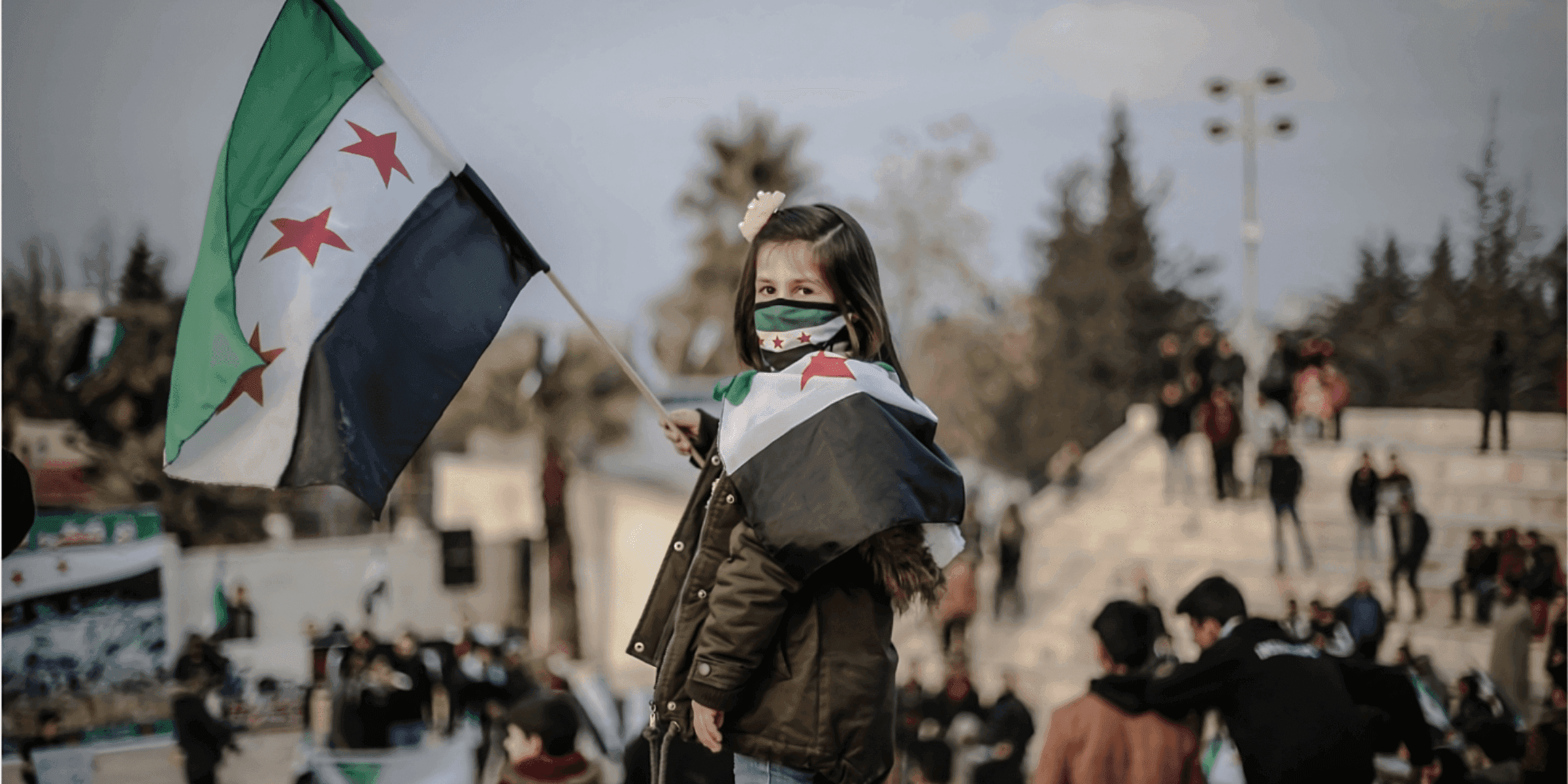
Advocate for Syria
The current situation
Thirteen years of war have claimed over 600,000 lives, forcefully displacing 12.1 million Syrians and injuring or permanently disabling 2.1 million. Cities have been reduced to rubble, infrastructure has been obliterated, and the nation has been plunged into abject poverty.
Yet, through the struggles and sacrifices of the Syrian people, they have liberated their lands and are now determined to rebuild. This moment presents a unique opportunity to contribute to the nation-building efforts of a land that holds immense political and religious significance for the Ummah.
The people of Syria need our humanitarian support, but they also require our voices - to advocate on their behalf, to raise awareness of the crimes committed by the former Assad regime, and to champion their efforts in striving for a prosperous future grounded in the noble principles of Islam.
Get Involved- Be The Change!


Donate
Support our humanitarian work as well as our advocacy in support of the people of Syria.

Background: Syria’s Long Road to Liberation
1920-2011: From French Occupation to Assad Dictatorship
The Alawites, a fringe minority group in western Syria, gained influence under post-WWI French colonial rule, which used them to suppress the Sunni majority. After independence in 1946, Hafez al-Assad, a young Alawite, rose through the newly formed Syrian Ba’ath Party, which seized control in 1963. Assad forcibly took control in 1970, installing Alawites in key military and intelligence positions to consolidate his power. His brutal regime, infamous for the 1982 Hama massacre that killed up to 40,000, was succeeded by his son Bashar in 2000. Bashar continued his father’s authoritarian rule, governing through ruthless repression and corruption.
2011: The Spark in Daraa that Set Syria Ablaze
The 2011 Syrian revolution began in Daraa after the brutal torture of teenagers arrested for anti-regime graffiti. This sparked mass protests led by ordinary citizens, but Assad, relying on his Alawite loyalists, responded with violent repression, turning the uprising into an armed conflict. Relentless government attacks, including biological weapons and barrel bombs, escalated the war. Sectarian divisions deepened, with Alawites largely supporting the regime while others joined the rebel factions. However, the civil war quickly morphed into a regional and global conflict, drastically complicating matters.
A Three-Layered War: Local, Regional, and Global
The war can be thought of as having had three distinct layers: the first was the core conflict, a triangular war between armed opposition groups fighting to liberate the country, the Assad government, and both sides fighting against ISIS. The second layer involved a regional conflict, with Iran and its proxies backing Assad, the Gulf kingdoms supplying various rebel factions, while Turkey fought Kurdish-backed armed groups. The third layer was a global conflict, with Russia and, increasingly, China pitted against the US and its allies. These layers of conflict interlinked with one another in various ways.
December 2024: From Stalemate to Shockwave: The Sudden Fall of Assad
By 2019, the Syrian war had reached a stalemate, with 600,000 dead and millions displaced. The rebels were pushed out of major cities and confined to Idlib, where HTS held power. By 2023, most of the world had resigned to the idea that Assad was here to stay, and he was reintegrated into the Arab League. Then came a stunning 12-day offensive by Syrian opposition forces, which led to the extraordinary collapse of the Assad regime on December 8, 2024, ending 54 years of brutal tyranny and sending shockwaves across the world.


© Copyright 2026 Human Aid & Advocacy. All rights reserved. Registered Charity No. 1138111